
 So much for free market capitalism. Big U.S. businesses have experienced exponential growth by buying cheap goods and labor overseas — and from our prison-industrial complex — forcing down prices and thus eliminating the competition of local small vendors of domestically-made goods. Now, these big businesses want to prevent mom and pop stores from doing the same . John Wiley & Sons, Inc., a textbook manufacturer, seek to ban the reselling of products made overseas that do not first allow US copyright holders taking a share of the profits or double dip. A single ruling by the Supreme Court could make all secondary market sites – including garage sales – illegal.
Supap Kirtsaeng v. John Wiley & Sons will center on whether or not an individual can buy copyrighted material outside the United States, then resell it inside the US. The “first-sale doctrine” is the provision in the Copyright Act that allows any purchaser of a legal copy of a book or other copyrighted work to sell or lend that copy. However, the U.S. Court of Appeals for the Second Circuit ruled that the first-sale doctrine applied only to copies manufactured in the United States. This odd interpretation of the law effectively strips libraries, second-hand users and dealers of their first sale right to lend or sell their own copies of works made abroad.
This is the second case the Supreme Court has heard on this issue in the last two years. In Costco v. Omega, a case involving the importation of luxury watches with copyrighted logos on them, the Court was deadlocked 4-4, leaving the issue unresolved. Justice Kagan recused herself from the case due to her participation in the lower court when she was Solicitor General, but Justice Kagan will participate in Kirtsaeng.
“Just as we did in Costco, libraries are standing up for common sense as well as their own rights and the rights of their patrons,” said Winston Tabb, president of Association of College & Research Libraries (ARL) and dean of University Libraries and Museums at the Johns Hopkins University, in an official statement. “It simply makes no sense that the law would treat lawful owners of legitimate copies differently depending on where their copies were printed. Why would Congress impose this arbitrary limit on the fundamental rights of libraries and our patrons—to reward publishers who send printing jobs overseas?”
The trial, which begins October 29, follows a Thai student at Cornell University’s choice to buy his textbooks abroad. Noticing that the books, required for class, were cheaper in Thailand, Supap Kirtsaeng had his relatives gather and mail them to him. Eventually, the graduate student began selling those books online at a profit.
The textbooks were legally manufactured in Thailand and sold there at a much lower price. Still, the publisher, John Wiley & Sons, Inc., sued Supap Kirtsaeng in an attempt to stop the sale of the books – and make him pay $600,000 in damages. In order for the publisher to win the case, the court would have to rule to ban the resale of internationally manufactured products.
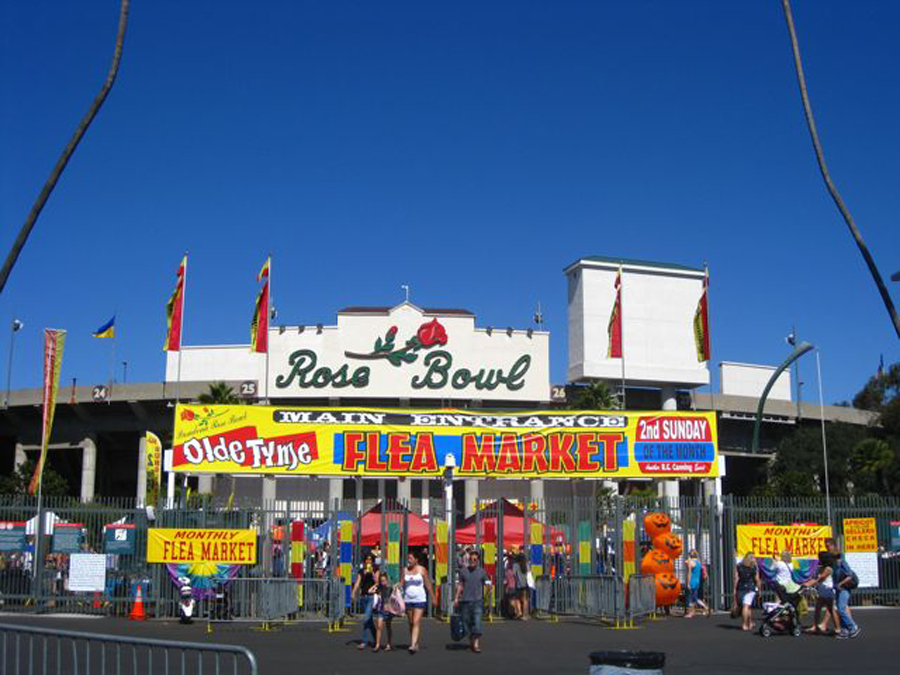
But if the Supreme Court chooses to do so, it would apply to anything that has a Made in China, Japan or Europe sticker on it – causing problems for businesses like pawnshops, the Salvation Army, eBay, Craigslist, and other resale-based organizations. Many garage sales would likely break the law and individuals could face hefty fines for simply selling an old gadget to a friend.
“It means that it’s harder for consumers to buy used products and harder for them to sell them,” Georgetown University Law Center professor Jonathan Band told MarketWatch. “This has huge consumer impact on all consumer groups.”
Selling anything produced overseas, including CDs and DVDs, jewelry, electronics, books or artwork, would only be allowed if the seller pays the copyright holder a portion of the sale.
Such a ban would prove especially troublesome for websites like Craigslist and eBay, which allow people to buy and sell their belongings online.
“It would be absurd to say anything manufactured abroad can’t be bought or sold here,” Marvin Ammori, a First Amendment lawyer, told MarketWatch.
In opposition to the potential change in copyright law, eBay has launched a movement to defend the first-sale doctrine. The online auctioneer has launched “eBay Main Street” – a website dedicated to mobilizing its merchants.
“It is possible that an extreme application of US copyright law might enable manufacturers to force retailers and consumers to first have to obtain permission from the manufacturer before reselling or even donating goods manufactured overseas,” the newly launched website states. “This rule could affect most of the goods we use every day, from books to cell phones.”
A coalition group called the Citizens for Ownership Rights (CFOR) has created a petition to express opposition against the change.
“We, the undersigned, believe that we should truly own the things that we buy,” it reads.
With a goal of collecting 100,000 signatures, the CFOR plans to send the petition to President Obama.