
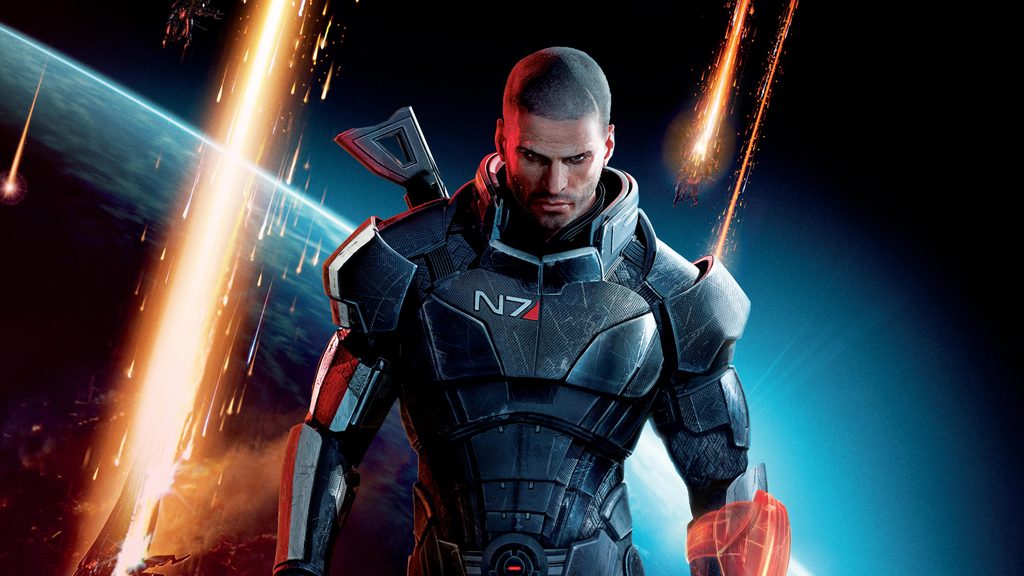
On October 21, EA Sports subsidiary BioWare posted a short letter to fans that read like a eulogy. “BioWare is closing and early development on the next Mass Effect project is ending,” the studio wrote, before adding the line that did the real damage: “There is nothing easy about writing those words.”
For a studio built on dialogue wheels, the farewell was remarkably plain. It named the canon, from Baldur’s Gate and Neverwinter Nights to Star Wars: Knights of the Old Republic, Dragon Age, Mass Effect and, with admirable honesty, Anthem. It did not name the company that made the call. But everyone knew.
From Edmonton to the Citadel
BioWare launched in Edmonton, Alberta, in 1995, founded by Ray Muzyka, Greg Zeschuk and Augustine Yip. All three were medical doctors, which explains a lot about a studio that treated role-playing like a bedside manner. Baldur’s Gate (1998) took the dense rules of Dungeons & Dragons and made them sing on a PC. Knights of the Old Republic (2003) made the Star Wars universe feel morally dangerous again, something the prequels never managed.
Electronic Arts announced it was buying BioWare in October 2007, folding it into a reported $860 million deal that also brought in Pandemic Studios. That same year, Mass Effect arrived. The original trilogy that followed is the reason this week’s news landed like a Reaper invasion.
The Mass Effect Years
The Mass Effect trilogy synthesized cinematic science fiction with a radical promise: the Commander Shepard you built in 2007 would carry every decision and every romance into 2012. It paid off in spades. Mass Effect 2 (2010) earned a Metascore of 96 from 98 critics, which Guinness World Records recognized as the most critically acclaimed role-playing game.
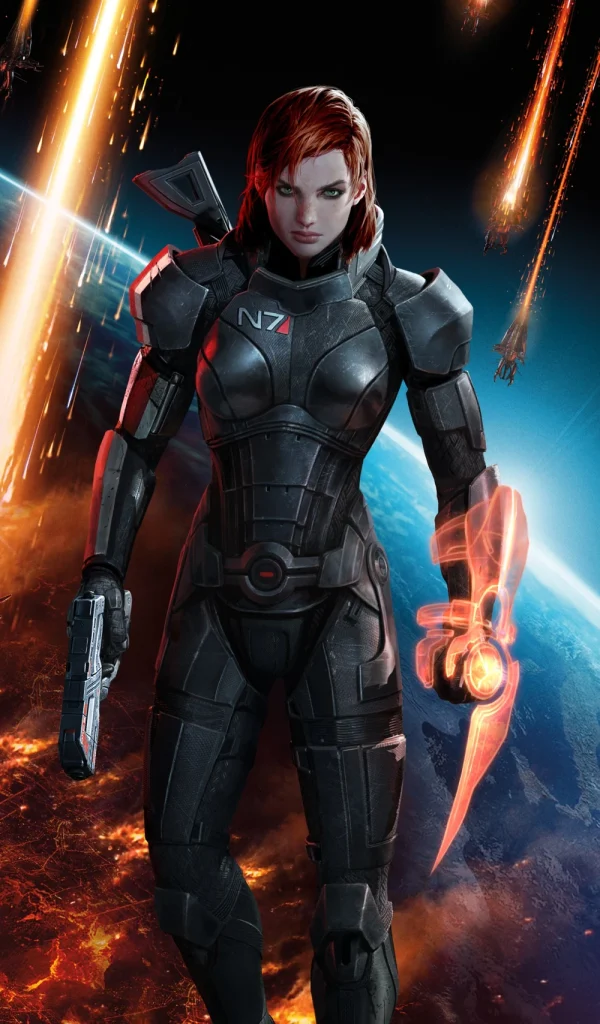
Jennifer Hale’s turn as the female Shepard became a fan touchstone, proof that a franchise marketed with a man on the box could be defined by the other Commander. BioWare also made room for players who rarely saw themselves in big-budget games, and by Mass Effect 3 both versions of Shepard could pursue same-sex romances. That mattered then. It matters now.
The trilogy’s ending, though, became the stuff of legend for different reasons. Fans furious over Mass Effect 3‘s finale launched the Retake Mass Effect campaign, mailing BioWare cupcakes in three colors that all tasted the same. The campaign raised $80,000 for charity, and BioWare answered with a free Extended Cut in June 2012. Few studios have been loved hard enough to be protested with frosting.
The Long Goodbye
The decline was not sudden. Mass Effect: Andromeda (2017) was mined for memes over its facial animations, and Anthem (2019), EA’s live-service gamble, was a critical and commercial misfire that pulled staff from other projects. Dragon Age: The Veilguard fared better with critics when it arrived in October 2024, but EA said it engaged 1.5 million players over its first three months, roughly half of what the company expected. By early 2025, BioWare had shrunk from more than 200 people to fewer than 100, with a small team kept on the next Mass Effect.
That project, teased at The Game Awards in 2020, had shown almost nothing since. As Forbes’ Paul Tassi noted, the trilogy’s architects, Casey Hudson, Mark Darrah and Mac Walters, were long gone.
Following the Money
The timing invites scrutiny. Earlier this year, EA was taken private in a deal valued at about $55 billion by a group that includes Saudi Arabia’s Public Investment Fund, Silver Lake and Affinity Partners, the firm run by Jared Kushner. A staff letter from COO David Tinson and Chief Studios Officer Cam Weber said the company had taken a “hard look at our business.” Bloomberg reported that about 400 jobs are being cut, roughly 3% of EA’s workforce, including about 50 at BioWare.
A note on what is not closing. Despite sharing a parent company, EA Sports is not part of this obituary. EA Sports, the label behind Madden NFL and EA Sports FC, is a separate arm of the company, and according to Game Informer’s account of the staff letter, EA’s sports titles will continue, as will its shooters and Star Wars projects. EA itself called BioWare “a legendary studio that helped define the role-playing genre, and we do not take this decision lightly.”
So what, exactly, does a $55 billion company keep? The football. The shooters. The licensed heroes. What does it let go? The studio whose best work asked players to sit with the consequences of their choices. Is that a verdict on BioWare, or on what the new owners believe games are for? And who gets to decide which worlds are worth saving?
Gamers voice Ire
Social media answered in all caps. “F***ING HELL BIOWARE IS DEAD 😫💔 SOMEONE PLEASE SAVE MASS EFFECT FFS,” one X user, @XxiKGixX, posted, in a roundup compiled by Kotaku. Another, @TheBlackHokage, kept it to five words: “I fell to my knees…”
On Bluesky, the grief turned sharper. Hayes Madsen wrote that “over the last two decades, EA has committed nothing short of cultural vandalism in video games.” @jesseguarascia.com mourned an “iconic Canadian studio, gone,” and pointed the finger at the buyout, quipping that it happened “because the US president’s son-in-law wants to help some Saudis own EA Sports FC or whatever.” Another user, @grlpants, wrote simply: “The loss of Bioware is… Heartbreaking.”
The industry chimed in, too. CD Projekt Red co-CEO Michał Nowakowski called it “not a great day in the games industry” and said BioWare had been “a massive part” of CD Projekt Red’s history. And Hale, ever the Commander, rallied the troops on an Instagram livestream: “BioWare lives on. Mass Effect lives on. We live on.”
Amazon’s Play for Mass Effect
Hale may be half right. Amazon’s live-action Mass Effect series, announced on N7 Day 2024 with Doug Jung as showrunner, is reportedly still in development, according to IGN. What EA does with the Mass Effect and Dragon Age names is anyone’s guess.
The honest assessment is a two-hander. BioWare’s last decade was a run of expensive stumbles, and its fabled “BioWare magic,” the late-stage scramble that used to rescue its games, stopped working. But a studio’s last few misses do not erase what it built: a generation of players who learned that a video game could remember who they were. That is a harder thing to cut than a line item.
N7 Day, the fan holiday when BioWare traditionally shared Mass Effect news, falls on November 7. For the first time, there will be no one at the studio to celebrate it. If this week is any guide, the fans will show up anyway.
Read BioWare’s full farewell letter at blog.bioware.com. The Mass Effect Legendary Edition is available on PC, PlayStation and Xbox.