
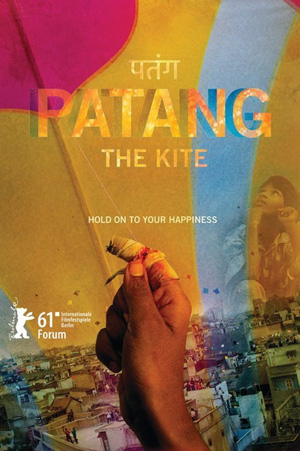
 First-time filmmaker Prashant Bhargava illuminates the transformative power of India’s annual kite festival, and the richness of Indian culture in “Patang (The Kite), a new independent film in select theaters now. “Patang (The Kite)” tells the story of a Delhi businessman’s struggle to reconcile his success with his family’s desires to remain in old Ahmedabad. Jayesh (Mukund Shukla) pays along overdue visit home to his family in Ahmedabad to participate in the kite festival, bringing along his daughter Priya (Sugandha Garg), who hasn’t seen these relatives in years. They get reacquainted with his mother (Seema Biswas), his grandmother Ba (Pannaben Soni), and his nephew Chakku–the son of his brother, who died of a heart attack. Chakku (Nawazuddin Siddiqui) resents the way this city dweller descends on his small town relatives and assumes a leadership position in the family. Jayesh tries to take control the family’s finances and dictate that they relocate to new Ahmedabad, where industrial jobs and new living quarters with modern amenities are abundant.
Using a mix of professional actors and untrained locals, Bhargava embues “Patang (The Kite)” with an epic quality and a sense of realism not often seen in narrative film, giving “Patang (The Kite)” the feel of a glossy documentary. Bhargava colorfully captures life in old Ahmedabad, with shots of locals going about their annual rituals leading up to the kite festival. Vendors scramble to place kite orders. Manufacturers prepare the kites. Children rush through town in a frenzy to hand deliver the kites for a few coins necessary to supplement family incomes. Patrons haggle over the quality of kite-strings – whether they are made the traditional way (strings of cotton thread are tied between pillars and coated with a concoction of rice powder, glass pieces, adhesive, chemical colors and cinnamon) or made with cheap nylon string from China matters. It becomes clear as the film unfolds, how integral these seemingly mundane activities are to the main event – the flying of the kites.
The kite festival takes place about 21 days after the winter solstice (between December 20 and 23), marking the starting of the phenomenon of ‘northward apparent migration of the sun’ or Uttarayana, which literally means northward journey of the Sun. With this shift comes winds that facilitates aggressive kite flying, mainly a sport pitting kite enthusiasts against each other in a kite-match to the death. The right kite string can literally shred apart an opponent’s kite during sky-battle, and a successful kite battle can level the playing field between social classes – at least for a day. ‘Young and old, rich and poor. They all gather together during the festival,” Bhargava said in an interview with Desiree T. Washington. “The kite flying is a form of meditation in its most basic form. For the community, it’s a major method of rejuvenation, healing and transcendence above individual issues.”
For Jayesh, the annual celebration make him less of a stranger to his neighbors and family. More important, it forces him to resolve the guilt he feels with being the only financially secure member of his family. His community may struggle financially, but they are at peace spiritually. In the old town, their hearts remain big and open, and their sense of self remains strong, despite new and flashy Ahmedabad’s allure. Bhargava vividly translates this spirit of community bonding through competition in “Patang (The Kite).”