
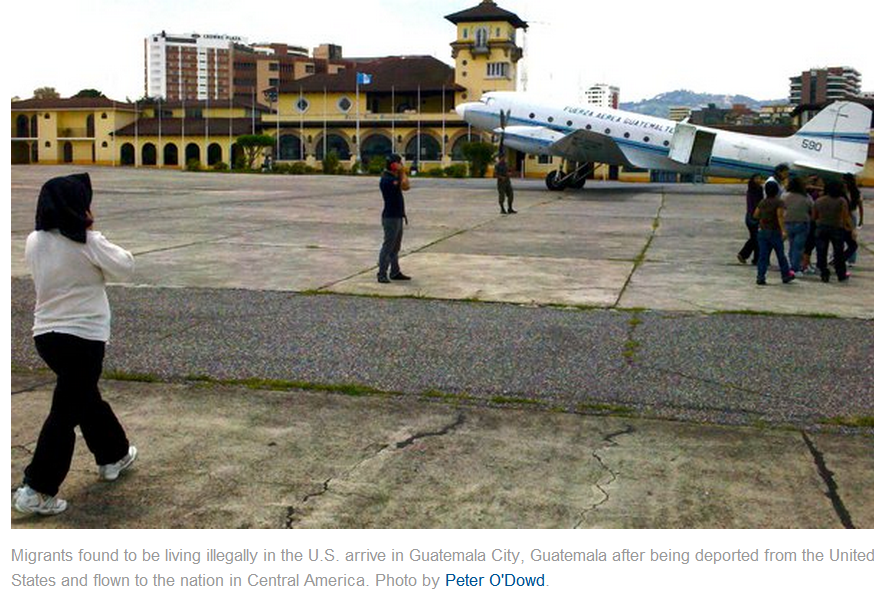
 TUCSON, AZ — The U.S. Border Patrol has halted flights home for Mexicans caught entering the country illegally in the deadly summer heat of Arizona’s deserts, in what is reportedly a move to shave nearly $100 million in expenses.
More than 125,000 passengers were flown deep into Mexico for free since 2004 in an effort that initially met with skepticism from Mexican government officials and migrants, but was gradually embraced as a way to help people back on their feet and save lives.
The Border Patrol hailed it as a way to discourage people from trying their luck again, and it appears to have kept many away — at least for a short time.
But with Border Patrol arrests at 40-year lows and fresh evidence suggesting more people may be heading south of the border than north, officials struggled to fill the planes and found the costs increasingly difficult to justify. Flights carrying up to 146 people were cut to once from twice daily last year.
“Everything comes down to dollars and cents,” said George Allen, assistant chief of the Border Patrol’s Tucson sector. “We’re running into a more budget-conscious society, especially with the government.”
He added: “Does it fit within our budget and is there an alternative that is not as effective but still effective?”
The Mexican Interior Repatriation Program flights carried 125,164 passengers at a cost of $90.6 million since 2004, or an average of $724 each, according to U.S. Immigration and Customs Enforcement.
The flights ran as few as 38 days in 2009 and as many as 120 days in 2010, when a record 23,384 passengers were flown. Last year, there were 8,893 passengers flown at a cost of $5 million — an average of $562 each.
The flights became a key piece of Border Patrol enforcement in Arizona as the agency moved to end its decades-old, revolving-door policy of taking migrants to the nearest border crossing to try again hours later.
The agency’s new strategy, introduced in Tucson last year and later extended to the entire border, relies on tougher punishments that were rolled out in recent years. One calls for jail for up to six months and another one buses migrants to border cities hundreds of miles away to be deported there.