
GAO, MALI — Gunfire erupted in the central area of Mali’s city of Gao Sunday as Al Qaida linked rebels, MUJAO, resist Malian and French troops advances. The fighting took place in the central streets of Gao, where near police headquarters, Malian soldiers with rocket propelled grenades traded fire with radical Islamist combatants widely reported to be from the Movement for Oneness and Jihad in West Africa, or MUJAO. The group has been sanctioned by the United Nations Security Council, citing an alliance with Al-Qaeda Organization in the Islamic Maghreb (AQIM) in 2012. MUJAO is an active militant organisation that broke off from AQIM.
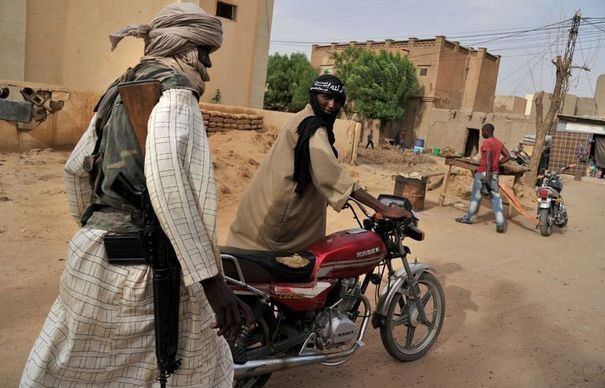 Soldiers were positioned at every corner in the neighborhood of mud-walled buildings, according to AP. Ever since French forces took the town in January, Islamists had clashed with security forces on the outskirts of Gao, but they had not yet succeeded in entering the city.
The fighting comes hours after a suicide bomber detonated himself at a checkpoint at the entrance to the town. An earlier suicide bomber blew himself up in Gao Friday.
Gao, the most populous city in northern Mali, was retaken by French forces in recent weeks. But as the French military moved north to pursue the Al-Qaida-linked extremists who had occupied northern Mali, jihadist cells near Gao began planting landmines and carrying out suicide attacks.
MUJAO broke with AQIM in mid-2011 with the alleged goal of spreading jihad further into areas of West Africa that were not within the scope of AQIM. Some analysts believe that the split of the Black African-led MUJAO is a consequence of the Algerian predominance on AQIM’s leadership. The group places greater emphasis on historical figures of West African origin, claiming to be the “ideological descendants” of Cheikhou Amadou, Usman Dan Fodio and El Hadj Umar Tall. “Today we are inaugurating jihad in West Africa” claimed one of the militants, who spoke in English and Hausa. Al-Qaeda-affiliated groups in Algeria, Mali, Niger and Mauritania had been present for at least a decade prior to the group’s founding and escalated further following the 2011 Libyan civil war and the influx of weapons in the desert area.
1 comment